iPhone Lookalike Phones in Kenya: What You Actually Get (2026)

The box says 17 Pro Max. The back has three camera rings set into a raised plateau, the frame comes in orange, and the price on Jumia is around KSh 12,000. Inside is an Android phone with a 720p screen, and no two sellers' spec sheets agree on what the main camera is.
That phone is a Calus, and it is one of three very different kinds of iPhone lookalike sold in Kenya. Some are honest budget Androids from the biggest brands in the country that happen to borrow Apple's styling. Some sell openly under small-brand labels, with model names picked to sit next to Apple's in a search box. And some carry an Apple logo they have no right to. The prices overlap. What you get for the money does not.
For scale: a genuine iPhone 17 Pro Max starts at around KSh 160,000 at Nairobi retailers (see our iPhone 17 Pro Max price page for used prices). Every phone in this guide costs a tenth of that or less.
The Three Kinds of Lookalike
| Type | Examples | Typical price | Logo on the back | Warranty and support |
|---|---|---|---|---|
| Mainstream brand, iPhone styling | Tecno Spark 40, Infinix Smart 10, itel A80 | KSh 11,000 to 13,000 | Tecno, Infinix, itel | Official, with service centres |
| Own-brand "Pro Max" | Calus 17 Pro Max, Calus IP 17 Pro Max, Hotwav A17 Pro Max | KSh 10,000 to 15,000 | Small brand name | Seller only, if at all |
| Counterfeit | "iPhone 16 Pro Max" or "17 Pro Max" with an Apple logo | Anything the seller can get | Apple (fake) | None |
Tier One: Tecno, Infinix and itel
Transsion, the Chinese group behind Tecno, Infinix and itel, has led Kenyan phone sales for years, and its design teams have made no secret of where they look for ideas. The camera island is the giveaway every time.
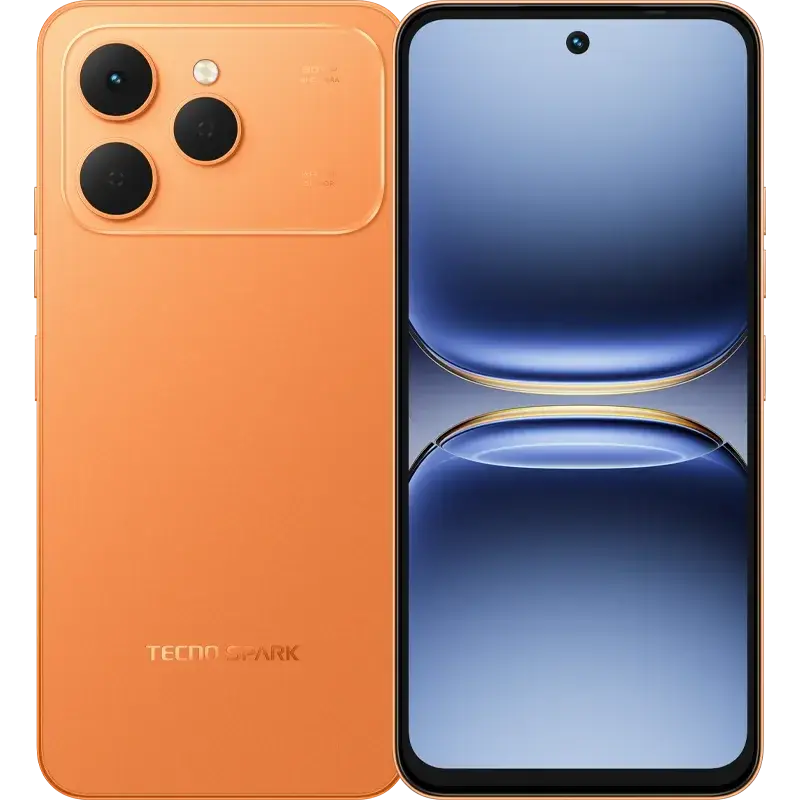
Tecno Spark 40. The most blatant of the current crop. A big raised camera plateau with three rings, in an orange straight from Apple's iPhone 17 Pro palette, and it went on sale before Apple had even announced the phone it copies. Only one of the three "lenses" is a real camera, a single 50MP shooter; the others are decoration. Underneath is a MediaTek Helio G81, a cheap and dated chip, alongside a 5,200mAh battery, 45W charging and IP64 splash resistance. Nairobi retailers list the 4GB/128GB version from around KSh 12,500.
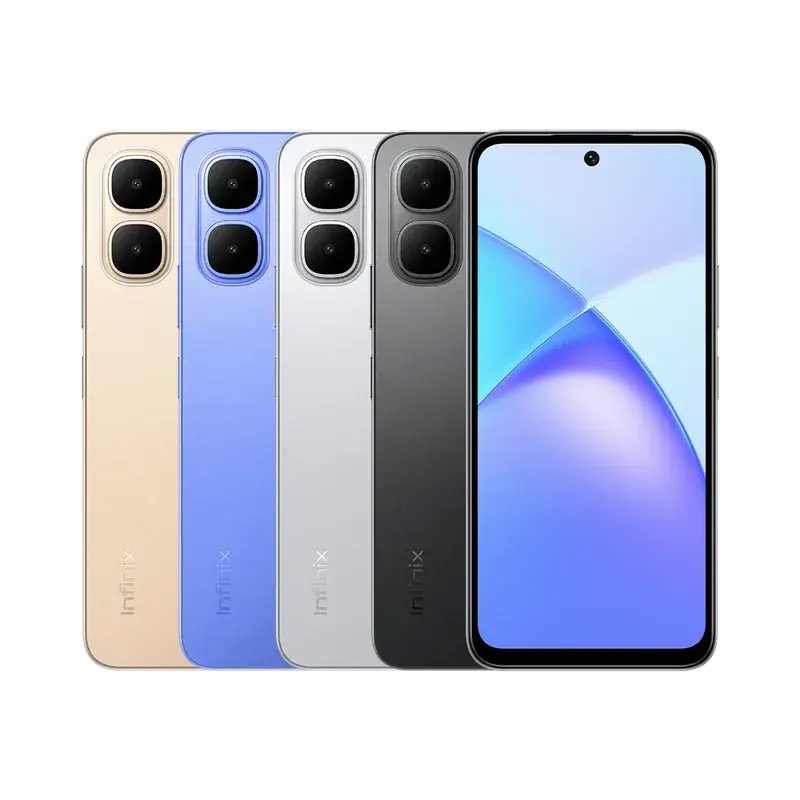
Infinix Smart 10. Takes the vertical pill-shaped camera layout of the iPhone 16 and puts it on a phone that sells in Kenya for around KSh 11,000. It adds a Dynamic Bar, Infinix's version of the Dynamic Island, which animates notifications around the selfie camera. The rear camera is just 8MP, a step down from the previous model.
itel A80. The cheapest way into the look. A Dynamic Bar around the punch-hole, a 6.7-inch 120Hz screen at 720p, a Unisoc T603 chip and a 50MP main camera, at around KSh 11,500.
What you actually get: a real phone from a real manufacturer. The IMEI checks out, there is an official warranty, Tecno and Infinix service centres exist in every major town, and spare parts are easy to find, so any shop in our repair directory can fix one. Performance is entry-level, the extra camera rings are often fake, and software updates are limited. But nothing about the phone is pretending to be something else. If the look is what you want, this is the tier to buy from. You can compare current Tecno, Infinix and itel listings on Mzuri, and our Tecno vs Infinix vs Samsung guide compares the brands.
Tier Two: Calus, Hotwav and the "17 Pro Max" Crowd
These phones carry their own brand on the back but borrow Apple's model naming, colours and camera layout wholesale. The point is to appear in search results next to the real thing.
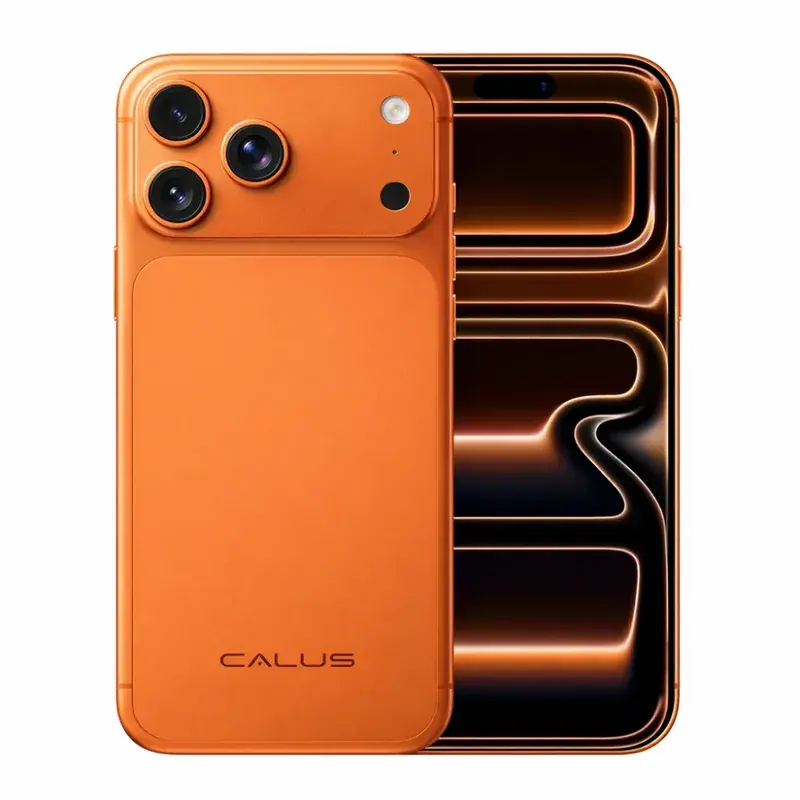
Calus 17 Pro Max and IP 17 Pro Max. The most visible in Kenya right now, sold on Jumia and Kilimall and through Nairobi CBD shops. When we checked in September, Jumia had the 512GB "IP 17 Pro Max" at KSh 11,899 and Kilimall sellers asked KSh 12,969 to 14,999, often with a power bank, earbuds or a smartwatch bundled in. The listings promise up to 8GB of RAM, a 6.9-inch screen and a 50MP camera, but the same model name turns up with different insides from seller to seller: one says 50MP, another 48MP, and one retailer abroad sells it with 4GB of RAM and 64GB of storage. A used IP 17 Pro Max listed on Mzuri gives a 48MP main camera and an HD+ (720 x 1600) screen. Treat the spec sheet as advertising copy and check the hardware yourself (see below). Our Calus 17 Pro Max price guide covers the prices, the Play Store question and where the phone stands with the Communications Authority in full, and Calus M17 vs C17 vs IP 17 explains how the four Calus "17 Pro Max" models differ.
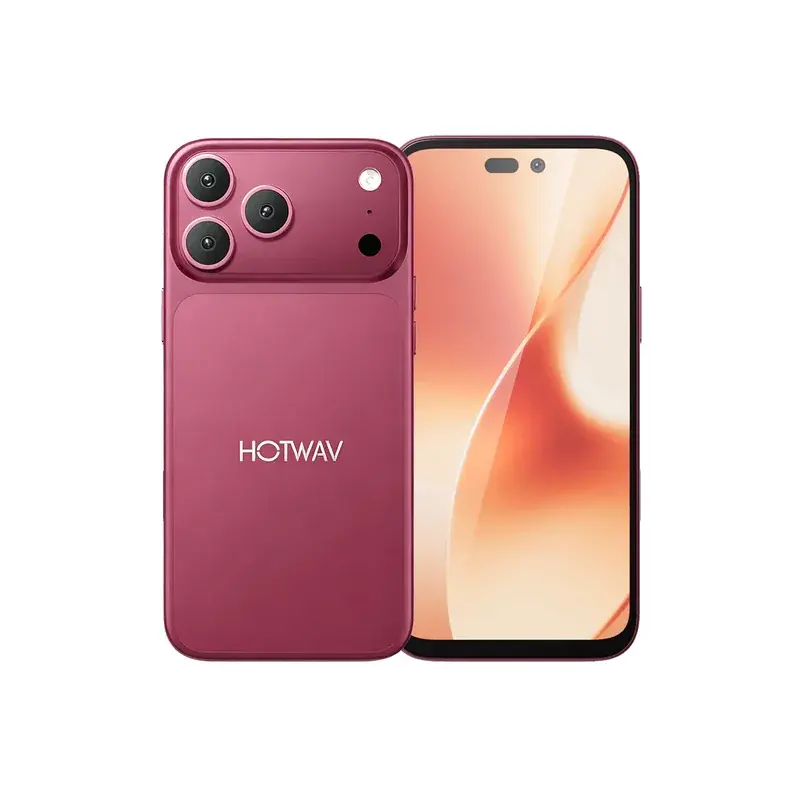
Hotwav A17 Pro Max. Hotwav is a Chinese brand sold through resellers in several markets, and its A17 Pro Max follows the same template: an orange colour option, a 6.75-inch screen, an ASR 8662 chip and 4GB of physical RAM, padded out with extra "virtual" RAM that is really storage borrowed as swap space. Retail listings give the rear camera as 13MP. It runs Android 15, which is more current than most of its rivals.
What you actually get: a low-end Android phone with an aspirational name. Most work as phones, run Google apps and get through a day on a charge. The problems are inflated specs, especially RAM, storage and camera megapixels, no service centre network, and warranties that depend entirely on the shop you bought from. Resale buyers price them as budget Androids, which is what they are. That Calus on Mzuri, three weeks old, was listed at KSh 9,000.
Tier Three: The Ones With the Apple Logo
The counterfeits are Android phones built into an iPhone-shaped body, stamped with an Apple logo, and loaded with a skin that mimics iOS: fake Dynamic Island, fake Control Centre, sometimes even a fake "About" screen claiming an Apple chip. Overseas wholesalers list them openly online. On a Nairobi street they can be sold as a "copy" at a copy price, or as a genuine iPhone at a genuine-ish price to someone who does not know better.
The Communications Authority of Kenya has estimated that 30 to 40 percent of phones in the country are counterfeit, based on its 2023 device counts, and says most move through street vendors, online marketplaces and unlicensed shops. It has had the networks switch off counterfeit handsets before, so a fake can stop working on Safaricom or Airtel long after the seller has disappeared.
What you actually get: the worst of everything. Hardware at the bottom of the barrel, an operating system that cannot receive real updates, no warranty, no resale value once anyone checks it, and a real risk of losing network access. Selling one as genuine is fraud. Selling one at all trades on a trademark that is not yours.
How to Tell Which One You Are Holding
- Open Settings, then About phone. If it mentions Android, Linux or a Google Play version anywhere, it is not an iPhone, whatever the home screen looks like.
- Check the serial on Apple's coverage site. A real iPhone's serial number, found under Settings > General > About, will return a model and warranty status at checkcoverage.apple.com. A fake will not.
- Dial
*#06#for the IMEI and compare it with the number on the box and the SIM tray, then text it to 1555 for the Communications Authority's free check. Mismatches are a bad sign on any phone. Our IMEI guide explains the reply. - Check Play Protect certification. In the Play Store, tap your profile, then Settings, About. An uncertified device is a grey import or a clone.
- Install a hardware info app such as DevCheck or CPU-Z. It reads the real chip, RAM, storage and camera sensors rather than what the box claims.
- Cover the lenses one at a time with the camera app open. If the picture does not change, that lens is a sticker.
- Trust the price. A new "16 Pro Max" or "17 Pro Max" at KSh 15,000 is not an iPhone. Even a used 15 Pro Max well under KSh 80,000 deserves a closer look. Our guide to spotting a fake phone in Kenya goes through the full checklist.
So, Which Is Worth the Money?
If you want the iPhone look on a budget, buy Tier One. A Tecno, Infinix or itel gives you the styling, a real warranty and a phone that will still sell later. Tier Two is a gamble on a spec sheet you cannot trust, at roughly the same price. Tier Three is not a phone purchase at all; it is a bet that nobody, including the network, ever checks.
And if what you actually want is an iPhone, a clean used iPhone 11 or iPhone 12 costs more than any of these, but it is the real thing and holds its value far better. Our pick of the best second-hand iPhones to buy in Kenya and the budget phones under KSh 15,000 guide cover both routes.
Want the real thing?
Browse genuine used iPhonesSelling a Lookalike?
List it on Mzuri under its real brand and model name. Buyers searching for a Calus 17 Pro Max or a Spark 40 are looking for exactly that, and an honest title sells faster than one with Apple's name in it. Give the RAM and storage the phone reports in Settings rather than what the box says, and price it below the cheapest new listing on Jumia or Kilimall. Our guide to writing a listing that sells covers the rest.
Selling a Calus, Spark or any other phone?
List your phone for freeFrequently Asked Questions
Which phones look like an iPhone in Kenya? The Tecno Spark 40, Infinix Smart 10 and itel A80 copy iPhone styling from mainstream brands with official warranties. The Calus 17 Pro Max and Hotwav A17 Pro Max borrow Apple's model names as well. Counterfeits go further and carry a fake Apple logo.
Is the Calus 17 Pro Max an iPhone? No. It is an Android phone from a Shenzhen company, styled after the iPhone 17 Pro Max. It cannot run iOS or iPhone apps.
Is a phone that looks like an iPhone illegal in Kenya? Copying a design is not the same as counterfeiting. A Tecno or Calus with its own logo is sold legally as its own brand. A phone carrying a fake Apple logo is a counterfeit, and selling it as a genuine iPhone is fraud.
How can I tell if an iPhone is fake? Check Settings for any mention of Android, run the serial number through Apple's coverage site, and compare the IMEI on the phone, box and SIM tray. A real iPhone passes all three.
What is the best iPhone lookalike to buy? One from Tier One. The Tecno Spark 40, Infinix Smart 10 and itel A80 give you the look with a real warranty, service centres and resale value.

Brian Otieno
Tech Writer · Nairobi, Kenya
Brian Otieno is a Nairobi-based technology writer who has covered Kenya's mobile market for the better part of a decade, from entry-level feature phones to the latest Android and iPhone flagships. He reviews handsets, tracks live pricing across Nairobi's phone hubs, and writes practical buying and selling guides for Kenyan shoppers. He has hands-on experience with M-Pesa workflows, network unlocking, IMEI checks and the second-hand resale scene.